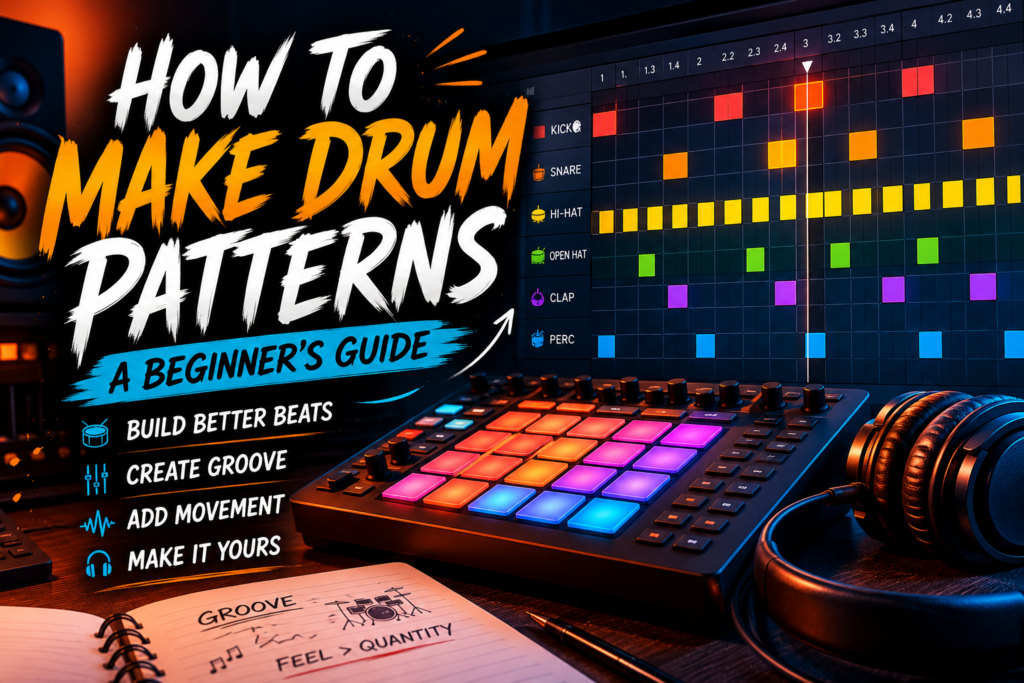
 Drum patterns are the heartbeat of modern music production. Whether you’re producing hip-hop, R&B, trap, pop, or electronic music, the drums often determine the energy, groove, and emotional feel of a track. A great drum pattern can turn a simple melody into a compelling song, while a weak pattern can make even amazing chords feel lifeless.
For beat makers, learning how to create strong drum patterns is one of the most important skills you can develop. It improves rhythm, enhances musical creativity, and helps you build tracks that feel polished and professional.
In this guide, we’ll break down what drum patterns are, explore common styles, discuss the best tools for creating them, and walk through how to build your first pattern from scratch.
Understanding the Basics: What Are Drum Patterns and Why Do They Matter?
A drum pattern is a repeating rhythmic sequence created using drum sounds such as kick drums, snares, hi-hats, claps, percussion, and cymbals. These patterns form the rhythmic foundation of a song.
Think of drum patterns as the framework that supports everything else in your production. They establish timing, groove, movement, and energy.
The Role of Drum Patterns in Music Composition
Drums serve multiple purposes in a song:
- Establish the tempo
- Create groove and movement
- Support the melody and harmony
- Drive emotional intensity
- Guide transitions between song sections
For example, in trap music, fast hi-hat rolls create excitement and momentum. In R&B, softer drum grooves often feel laid-back and emotional. In rock, aggressive kick and snare combinations provide power and impact.
Why Learning Drum Patterns Improves Your Production
When you learn to program drum patterns, you improve:
- Rhythm awareness
- Timing precision
- Arrangement skills
- Creative decision-making
- Overall beat quality
Strong drum programming helps your beats feel intentional rather than random.
Getting Started: Recognizing Different Types of Drum Patterns
Before creating your own patterns, it helps to understand the rhythmic foundations of major genres.
Rock Drum Patterns
Rock patterns often emphasize strong backbeats.
Typical pattern:
- Kick on beats 1 and 3
- Snare on beats 2 and 4
- Hi-hats playing steady eighth notes
This creates a driving, energetic feel.
Blues Drum Patterns
Blues patterns often use shuffle rhythms or swung eighth notes.
Characteristics:
- Loose groove
- Swing feel
- Dynamic cymbal work
- Emphasis on feel over precision
Blues grooves feel human and expressive.
Jazz Drum Patterns
Jazz drumming is highly dynamic and improvisational.
Common elements:
- Ride cymbal patterns
- Syncopated snare accents
- Complex rhythmic interplay
- Swing subdivisions
Jazz teaches advanced rhythm and timing.
Hip-Hop and Trap Patterns
Modern beat makers often focus here.
Common traits:
- Heavy kicks
- Snappy snares
- Syncopated hi-hats
- Percussion layers
- Triplet rolls and stutters
This style dominates modern beat production.
Understanding Time Signatures and Tempo
Two core concepts affect every drum pattern.
Time Signature
A time signature tells you how beats are counted.
The most common is 4/4, meaning:
- 4 beats per measure
- Quarter note gets one beat
Most modern music uses 4/4.
Other examples:
- 3/4 (waltz feel)
- 6/8 (ballad or cinematic feel)
- 5/4 or 7/8 (progressive music)
Tempo (BPM)
Tempo determines speed and feel.
Examples:
- 65–80 BPM → Slow R&B / Trap Soul
- 80–100 BPM → Hip-Hop
- 120–130 BPM → House / Dance
- 140–160 BPM → Trap (double-time feel)
Tempo changes how the exact same drum pattern feels.
Popular Rhythmic Patterns and Their Influence
Many iconic genres are built around recognizable rhythmic ideas.
Examples include:
- Boom bap hip-hop
- Trap bounce
- Four-on-the-floor house groove
- Funk syncopation
- Reggaeton dembow rhythm
Studying classic rhythms helps you understand why certain grooves feel timeless.
Tools of the Trade: Software and Instruments for Crafting Drum Patterns
Today’s producers have more tools than ever.
Drum Machines
Drum machines let you sequence rhythms quickly.
Popular options include:
- Akai MPC Live 3
- Roland TR-808
- Roland TR-1000
Drum machines are especially popular in hip-hop and electronic music.
Digital Audio Workstations (DAWs)
A DAW is where most producers build drum patterns today.
Popular choices include:
- Ableton Live
- FL Studio
- GarageBand
- Reason
Each DAW offers:
- Piano roll editing
- Drum sequencing
- Sample manipulation
- Effects processing
Real Drums vs Synthesized Drums
Both approaches offer advantages.
Real drums
- Organic
- Human feel
- Natural dynamics
Synthesized drums
- Precise
- Highly customizable
- Genre-flexible
Many producers combine both.
Step-by-Step: Creating Your First Drum Pattern
Let’s build a simple groove.
Step 1: Set Your Tempo
Choose a BPM.
For this example:
90 BPM
This works well for hip-hop and R&B.
Step 2: Add the Kick Drum
Start with the foundation.
Place kicks on:
- Beat 1
- Beat 3
- Additional syncopated hits for groove
Avoid making every kick predictable.
Step 3: Add the Snare or Clap
Place snares on:
- Beat 2
- Beat 4
This creates the core backbeat.
Step 4: Add Hi-Hats
Hi-hats add movement.
Start simple:
- Eighth notes
or - Sixteenth notes
Then experiment with:
- Rolls
- Triplets
- Velocity changes
- Open hats
These details make patterns feel alive.
Understanding Beat Subdivisions
Subdivisions split beats into smaller pieces.
Examples:
- Quarter notes
- Eighth notes
- Sixteenth notes
- Triplets
The more you understand subdivisions, the more creative your drum programming becomes.
For example:
A basic hi-hat pattern may use straight sixteenth notes, but adding triplets creates modern trap bounce.
Experimenting With Fills and Transitions
Fills help transition between sections.
Examples:
- Snare rolls
- Tom fills
- Reverse cymbals
- Crash hits
- Percussion bursts
Use fills to signal:
- Verse to hook
- Hook to bridge
- Build-ups and drops
Small details create professional arrangements.
From Creation to Masterpiece: Enhancing Your Drum Patterns
Once the basics are in place, it’s time to add depth.
Use Layering
Layer multiple sounds together.
Examples:
- Snare + clap
- Kick + low percussion
- Closed hat + shaker
Layering creates fuller drums.
Use Space
Beginners often over-program.
Silence is powerful.
Leaving space creates:
- Groove
- Bounce
- Clarity
Sometimes removing sounds improves the beat more than adding sounds.
Use Syncopation
Syncopation means placing accents off the expected beat.
This creates:
- Groove
- Swing
- Human feel
Many elite producers rely heavily on syncopation.
Collaborating With Musicians to Improve Drum Patterns
Working with other musicians accelerates growth.
Collaborate with:
- Drummers
- Producers
- Keyboard players
- Engineers
They can help identify:
- Weak grooves
- Timing issues
- Better transitions
- Creative opportunities
Fresh ears often reveal what you miss.
Final Thoughts
Learning how to make drum patterns is one of the most valuable skills in music production. Every great beat begins with rhythm, and strong drums can instantly elevate your music.
Start simple. Focus on groove. Study rhythms from multiple genres. Experiment with layering, syncopation, and sound selection.
Over time, your drum patterns will evolve from basic loops into powerful, professional grooves that make listeners move.
The best way to improve is simple: keep building beats.