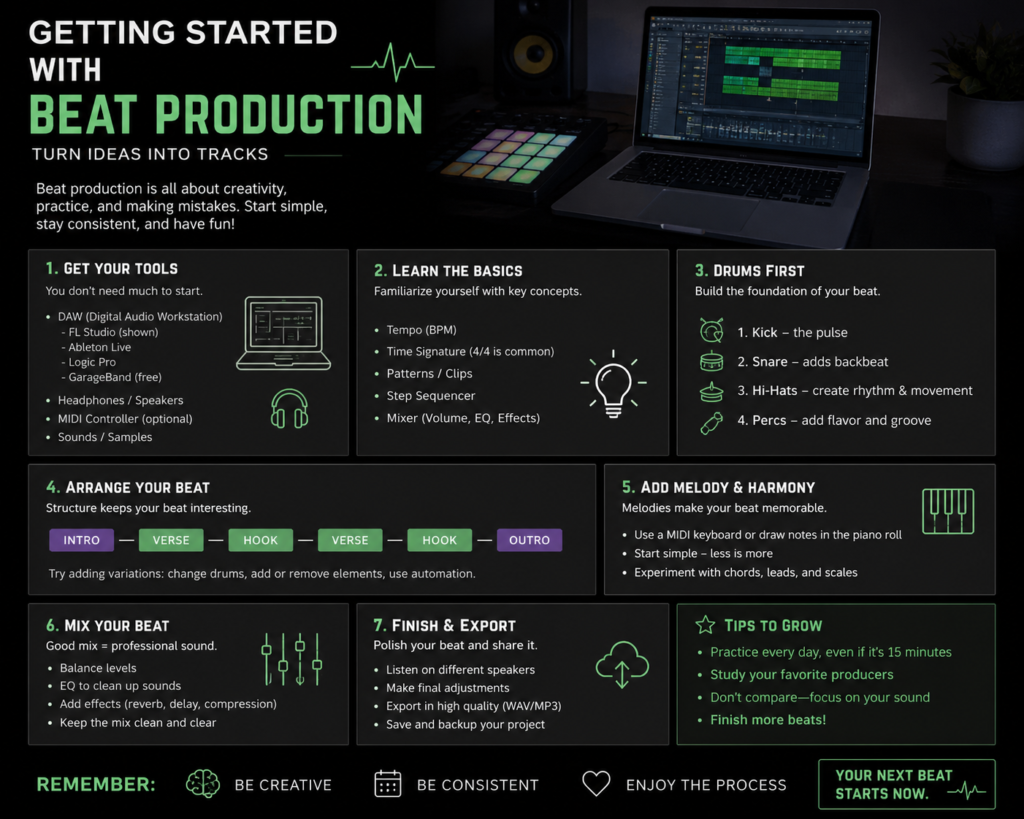
 Beat production kind of feels like magic at first, but it’s really just a cool blend of rhythm, melody, and your unique style. If you’re new to this, don’t stress—you’re not alone. Beats are the backbone of a track, driving the music with a certain vibe that can make listeners want to dance, chill, or anything in between.
So, what’s a beat made of? It’s got a few key ingredients: melody, harmony, and rhythm. Melody is what you hum in the shower or get stuck in your head. Harmony complements the melody and adds depth, often with chords. Rhythm is the beat’s heartbeat—the pulse that gets the foot tapping.
Every music genre has its own signature beat style—hip-hop beats differ a lot from pop or electronic ones. Take hip-hop; it often features heavy basslines and intricate rhythms. Pop hits might rely on catchy melodies and simpler rhythms that stick with you after the song ends. Dive into the sounds of different genres to get a feel for what you like and where you’d like to start.
Now, you’re probably wondering, “What makes a beat stand out?” It’s got to be catchy, for one thing. Imagine a simple yet infectious rhythm that hooks listeners. But it’s gotta be more than catchy. Good beats balance all elements perfectly—nothing too overpowering, nothing too weak. And remember, what makes a beat ‘good’ can vary. It’s all about personal taste and what moves you and your audience.
The journey into beat production is like exploring uncharted territory, but it starts with understanding these basics. Know your ingredients, find some beats you love, and you’ll start seeing how different elements come together in no time. Keep things open-minded and try absorbing as much music as you can.
Essential Tools and Software for Beat Making
Now that we’ve got the basics down, it’s time to chat about the gear you’ll need to cook up those beats. The right tools can make the music-making process way smoother, so let’s break it down.
First up, you’ll need a Digital Audio Workstation, or DAW. Think of this as your virtual music studio where all the magic happens. There are tons of options out there, from GarageBand for beginners to FL Studio, Ableton Live, and Logic Pro for more seasoned producers. Picking a DAW can feel overwhelming, but most of them offer trial versions. Test ’em out to see which one vibes with you.
Don’t forget about the hardware. A MIDI controller or keyboard can take your beat-making to the next level. These handy gadgets let you play instruments within your DAW, offering hands-on control over your music. If you’re feeling fancy, an audio interface can help connect instruments and mics to your computer, giving you better sound quality.
Headphones and studio monitors are crucial, too. You might be tempted to use regular earbuds, but for a true sense of your music’s depth and texture, investing in quality headphones and monitors can make a big difference. These will ensure you hear every beat, note, and bass line as they’re meant to be heard.
Sound libraries and sample packs are your secret weapons. They’re packed with pre-recorded sounds and loops to help spark your imagination. Explore different packs, like drum kits or atmospheric sounds, to freshen up your beats. There’s a treasure trove of free and paid options online—an explorer’s paradise for your inner beat scientist.
Equipping yourself with the right tools sets a solid foundation for your musical journey. Whether you start small or go all out, your setup should match your needs and grow with you. With your toolkit ready, it’ll be easier to translate the beats in your head into bangers you can share with the world.
Step-by-Step Guide to Creating Your First Beat
It’s time to roll up your sleeves and build your first beat! Starting can feel a bit like standing at the foot of a mountain, so let’s take it one step at a time.
Before hitting those virtual keys, a basic grasp of time signatures can be really helpful. Most popular music goes with a 4/4 time signature, and it’s essentially the framework that your beat will stick to. Imagine this as the scaffold for your creative constructions.
On to the drum patterns, which pretty much form the core of your beat. Start simple: kick drum on the downbeat, snares on the second and fourth beat, and hi-hats filling in between. As you get more comfortable, experiment with different rhythms and complexities.
With a basic beat going, it’s time to layer in some melody. This is where your virtual instruments become your playground. Use them to create tunes that sit nicely on top of your rhythms. This might start with a simple piano riff or a catchy synth line that complements your drums.
Next, effects like reverb and delay are there to spice things up. They add space and texture, making your instruments sound fuller and more vibrant. Try them out and tweak until your beat has the depth you’re looking for.
Mixing is your final step. It’s like balancing levels on a soundboard to make sure every element shines yet nothing overpowers the others. Start by adjusting volumes so each part of your beat is heard clearly. A bit of panning might help; moving certain sounds to the left or right speaker can add a wider feel.
With your first beat completed, you’ve just set foot onto what could be an epic journey. Keep experimenting, trying new elements, and trust those creative instincts. That’s how you grow with each track.
Enhancing Your Skills and Sharing Your Music
With your first beats under your belt, the journey doesn’t stop—it’s just getting started. Time to think about taking your skills to the next level and getting your music out there.
Practice is your best friend in this world. Set aside dedicated time each week for creating, experimenting, and maybe even failing a bit. Those stumbles often turn into your best lessons. Try remixing a song you love or setting small challenges, like creating a beat using only sounds from your kitchen. These will stretch your creativity and help you discover new techniques.
Beyond your usual practices, explore various musical techniques. Learn about chord progressions or dip into music theory to spice up your beats, even if it’s just the basics. Understanding these concepts can open up a world of possibilities and give you more tools to work with when inspiration strikes.
Networking is another key part. The beat-making community is vast and full of people just as passionate as you are. Get involved with online communities where feedback and collaboration are the norms. Platforms like Reddit, SoundCloud, and BeatStars are great places to start. Learn from others, join discussions, and don’t shy away from sharing your work—constructive criticism is golden.
Once you’re comfortable, consider showcasing your beats. There’s a bunch of platforms where you can upload or even sell your music. Sites like Bandcamp can be great for independent artists, giving you a spotlight and possibly an income too. It’s about putting yourself out there and getting your beats heard, which is hugely rewarding.
Building your skills and sharing your music with the world is a thrilling part of the beat-making experience. Each track is a step in your growth as an artist, and putting it out there is part of the adventure. Keep challenging yourself, stay curious, and let the music lead where your creativity goes.